
A shared role in a child’s education
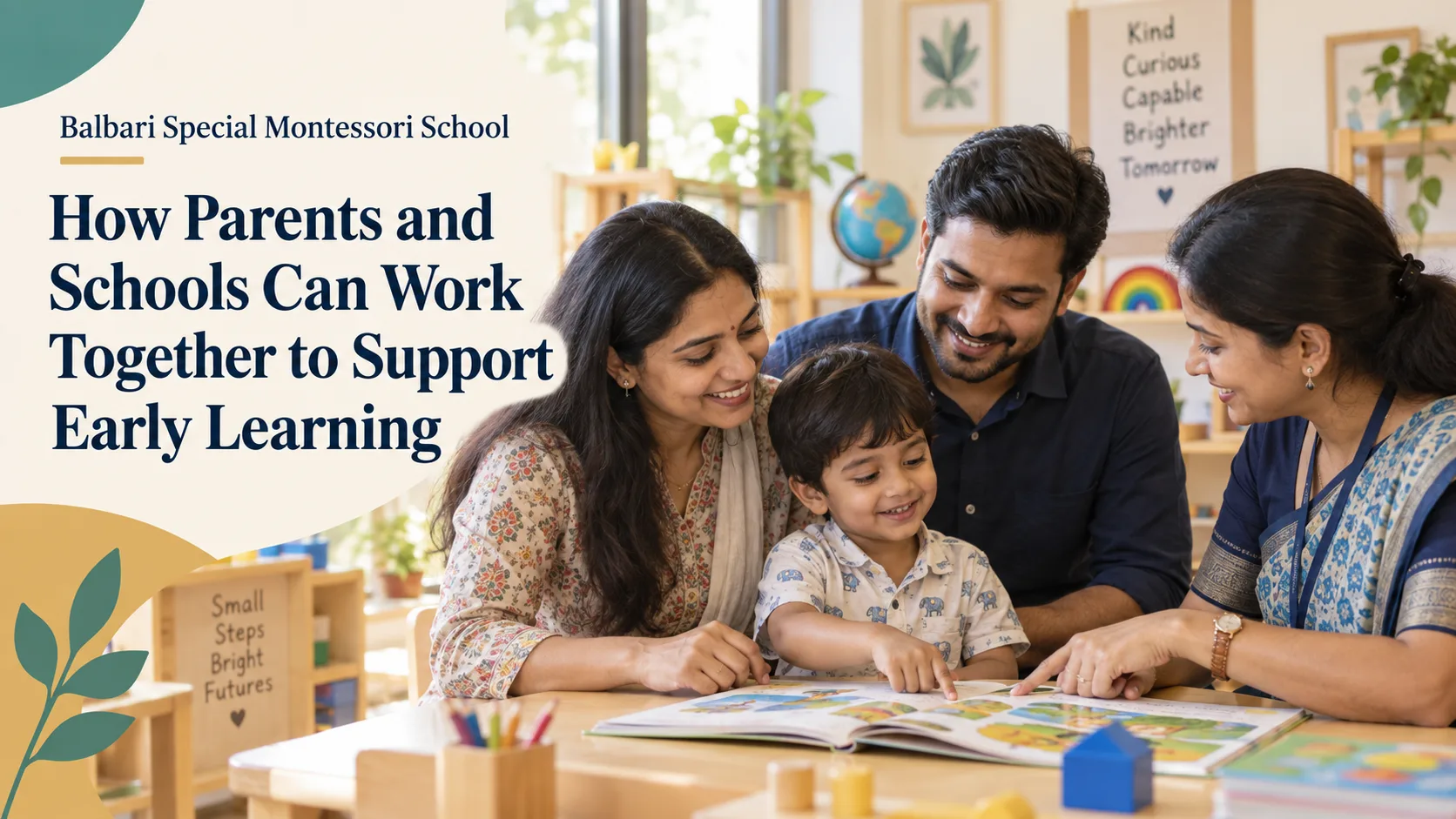
A child’s learning continues across different settings. At school, children encounter structured activities, teachers, and classmates. At home, they learn through conversations, routines, family relationships, and everyday experiences. When the adults in these settings understand one another, they can provide clearer and more consistent support.
For families considering Balbari Special Montessori School in Sardarshahar, this partnership can begin with learning about the school and asking practical questions. Balbari’s About Us page identifies the school as a Montessori institution managed by Gandhi Vidya Mandir. Parents can build on that information by discussing how classroom expectations and home routines can support their child together. Source: Balbari About Us
Start with an understanding of the child
Children arrive at school with different experiences, interests, languages, and levels of confidence. Some are comfortable meeting new people; others need time to settle. Parents know details about their child’s everyday behaviour that may not be visible in the classroom. Teachers observe how the child participates in a group and responds to learning activities.
Sharing relevant information helps create a fuller picture. Parents can explain what interests the child, what usually causes frustration, and which routines already work well. Teachers can describe classroom participation and emerging skills. The conversation should focus on understanding the child, with specific examples providing more useful guidance than broad labels such as “naughty” or “weak.”
Build predictable daily routines
A predictable routine helps children understand what comes next. Preparing for school, organising belongings, eating meals, completing suitable tasks, and having time for rest can become familiar parts of the day. Routines work best when they are realistic for the family’s circumstances and explained in simple language.
Parents can involve children in small preparations. Choosing a book for the bag or checking that a lunchbox is ready creates opportunities for responsibility. Visual reminders may help younger children remember a sequence. The aim is steady practice, not rigid perfection. If mornings regularly become stressful, changing one practical step may be more useful than repeating the same instructions more loudly.
Keep communication clear and specific
Useful communication describes what is happening and asks what might help. A parent might say that the child is reluctant to leave home on certain mornings. A teacher might explain that the child participates happily after settling but finds the first transition difficult. Together, they can identify a small adjustment to try.
Avoid waiting until a concern becomes overwhelming. At the same time, use the school’s established communication channels and allow reasonable time for a response. Share important changes that may affect the child’s day when appropriate. Brief, respectful conversations can help adults coordinate support without turning every ordinary difficulty into a major problem.
Make reading a shared experience
Reading together offers a practical way to support language and connection. Parents can look at pictures, read a short story, or ask children to describe what they notice. The experience can remain enjoyable even when the child is not yet able to read independently.
Let the child ask questions and revisit favourite pages. Talk about characters, events, and unfamiliar words in everyday language. If the family uses more than one language, meaningful conversation and storytelling can take place in those languages too. Ask the teacher how reading is introduced at school so that home support complements the child’s current learning stage.
Encourage independence with patient guidance
Children need chances to practise tasks that they can increasingly manage themselves. Packing materials, putting shoes in their place, tidying after an activity, or remembering a simple instruction can support growing responsibility. Adults should select tasks that match the child’s abilities and provide help when needed.
Give enough time for an attempt. A task that takes an adult a few seconds may take a child much longer. Demonstrate clearly, allow practice, and offer specific guidance if the child becomes stuck. Parents and teachers can discuss which responsibilities are appropriate so that expectations remain understandable across home and school.
Notice effort and describe progress
Encouragement is more useful when it tells children what they have done well. “You checked your work carefully” or “You asked for help politely” points to a behaviour they can repeat. General praise may feel pleasant, but specific feedback helps children recognise the steps involved in learning.
Progress does not always appear as a higher score or a perfect worksheet. It might be greater willingness to speak, better organisation, or more patience with a difficult task. Discuss these developments with the teacher. Avoid comparing the child with classmates or siblings, because comparison gives little guidance about what the individual child needs to practise next.
Respond calmly when learning is difficult
Some tasks will be challenging, and occasional frustration is part of learning. Before adding extra practice, try to understand the difficulty. Is the instruction unclear? Is the activity too long? Does the child need a practical example? A conversation with the teacher can help identify a useful starting point.
Break a task into smaller steps and acknowledge what the child can already do. Keep support focused and manageable. If a difficulty persists, seek guidance about the next appropriate action rather than assuming the child is unwilling to learn. Adults can communicate confidence in the child’s ability to make progress while recognising that additional support may be necessary.
Balance schoolwork with play and conversation
Home support does not need to resemble a second full school day. Children also benefit from opportunities to play, create, move, and talk with family members. Everyday experiences can provide meaningful practice: counting items, describing a journey, comparing shapes, or explaining how a game works.
Follow the teacher’s guidance on assigned work and keep expectations age appropriate. Avoid filling every free moment with organised lessons. Ask the child about something enjoyable or interesting from the day, rather than focusing only on marks. A balanced routine helps make learning part of ordinary life and gives parents a clearer view of the child’s interests.
Keep the partnership focused on practical next steps
The most useful parent–school partnership is built through regular, manageable actions. Agree on a specific goal, such as organising belongings or practising a reading habit, and decide how each adult can support it. Review what changes and adjust the approach when necessary.
Parents do not need to become classroom teachers, and teachers cannot observe every part of home life. Each brings a different perspective. By exchanging information respectfully, maintaining clear routines, and recognising individual progress, families and schools can help children feel supported. The shared goal is a child who can participate, ask questions, accept guidance, and approach new learning with increasing confidence.